
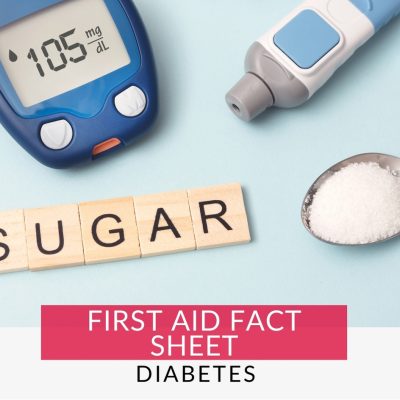
Recognise Signs and Symptoms of a Diabetes Emergency and what you need to do.
If you are unsure whether the patient has low or high blood sugar, give them a drink containing sugar (DO NOT use ‘diet’ soft drinks, eg Coke Zero, Pepsi Max).
During a Diabetes emergency, giving any form of sugar can save a patient’s life if blood sugar is low, and will not cause undue harm if blood sugar is high.
Download our Diabetes Emergency Fact Sheet now and equip yourself with a vital resource for moments that count.
Signs & Symptoms:
High blood sugar
- excessive thirst
- tiredness
- blurred vision
- hot, dry skin
- smell of acetone on breath
Low blood sugar
- weakness, shaking
- sweating
- headache
- faintness, dizziness
- lack of concentration
- teary or crying
- irritability or altered behaviour
- hunger
- numbness around the lips and fingers
These may progress quickly to
- slurred speech
- confusion
- loss of consciousness seizures.
What to do if there is a Diabetes Emergency:
High blood sugar (hyperglycemia)
- If the patient has medication, ask if they need assistance administering it. Only help the patient if they request it.
- Encourage the patient to drink water.
- Seek medical aid if symptoms worsen.
- If the patient has not yet been diagnosed with diabetes, encourage them to seek medical aid.
Low blood sugar (hypoglycemia)
- Help the patient to sit or lie in a comfortable position.
- Reassure the patient.
- Loosen any tight clothing.
- Give the patient sugar, such as fruit juice or a soft drink (NOT ‘diet’ eg Coke Zero, Pepsi Max), sugar, jellybeans, glucose tablets.
- Continue giving sugar every 15 minutes until the patient recovers.
- Follow with carbohydrates, eg a sandwich, milk, fresh or dry fruit, or dry biscuits and cheese.
- If there is no improvement in symptoms or the patient becomes unconscious, call triple zero (000) for an ambulance.
In a medical emergency call Triple Zero (000). You could save a life with First Aid Training