
Burn First Aid Management: Essential steps to help respond and manage a burn
A quick response to a burn will reduce pain and potentially long term effects. This Fact Sheet outlines essential first aid steps to manage a burn.
- Do not apply lotions, ointments, fat or ice to a burn.
- Do not touch the injured areas or burst any blisters.
- Do not remove anything sticking to the burn.
- If the burn is larger than a 20 cent piece, or deep, seek medical aid
This Burns First Aid Management Fact Sheet will help you identify the signs and symptoms and help you manage a burn emergency.
Signs & Symptoms:
Superficial burns
The area is: red, very painful, blistered
Deep burns
The area is: mottled red and white, dark red or pale yellow, painful, blistered.
Full thickness burns
The area: is white or charred, feels dry and leathery. Nerves are destroyed, the pain will not be as great as in a superficial burn
What to do:
If the patient’s clothing is on fire
- Stop the patient from moving around.
- Drop the patient to the ground and cover or wrap them in a blanket or similar, if available.
- Roll the patient along the ground until the flames are extinguished.
- Manage the burn.
Management for all burns:
- Follow DRSABCD.
- If the burn is severe or if it involves the airway, call triple zero (000) for an ambulance.
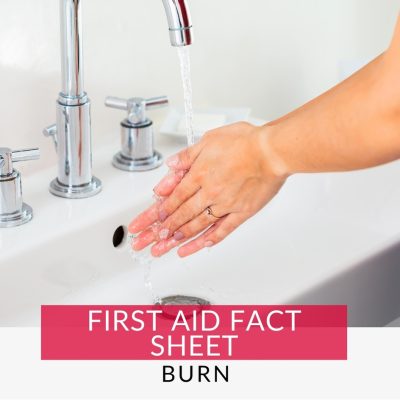
- As soon as possible, hold the burnt area under cool running water for 20 minutes.
- Remove any clothing and jewellery from the burnt area, unless they are stuck to the burn.
- Cover the burn with a light, loose nonstick dressing, preferably clean, dry, non-fluffy material (eg plastic cling film).
- Continue to check the patient for shock, and treat if necessary.
A ‘cold’ burn is actually tissue damage from extreme cold, thus treatment is different from thermal burns.
In a medical emergency call Triple Zero (000). You could save a life with First Aid Training