
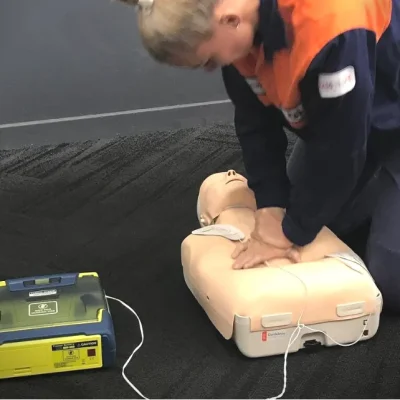
Learn CPR: Keep your loved ones safe
Our top 10 reasons why you should learn CPR!
1. Save a Life
First and most important reason?
Three simple words – It saves lives!
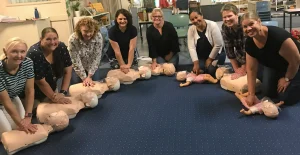
Save a life – it could be someone you know and love. It’s time to take steps to learn CPR!
Do you need any more reasons?
2. Awareness of CPR is still low!
Despite this incredibly important reason, CPR awareness remains relatively low.
Who will you be saving exactly?
Would you be surprised to know that 95% of the time that you are required to perform CPR, it will be on someone you know or someone you love.
Picture that!
This might be your son, your mum, your workmate, your baby, your sports buddy.

What if your baby needed CPR? Would you be prepared?
- Would you know what to do?
- How would you feel if it happened and you didn’t have the skills?
- Isn’t this reason alone to learn CPR?
Having CPR skills means you shall be prepared to help anyone in a life-threatening situation.
3. CPR helps in readiness for use of an AED (Defibrillator)
The whole aim of CPR is to keep the person’s blood circulating and oxygen flowing from lungs to brain. Once the heart stops beating, then brain death occurs within 4 – 6 minutes. That’s a scary thought and not a lot of time, so it is crucial to commence CPR as quickly as possible.
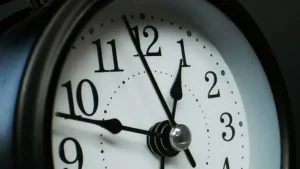
Brain death occurs between 4 – 6 minutes – TIME is crucial!
Are you aware of the locations of AED’s?
You may notice these days that many shopping centres, clubs, airports, train stations and some larger workplaces have an AED in place. Look around next time you are out and about.
Applying a defib to a casualty requiring CPR increases the person’s chance of survival from 10% to 80%.
Often critical first aid response is not offered to the person, instead awaiting on emergency services to arrive and in many cases it’s all too late. Taking action straight away is key.
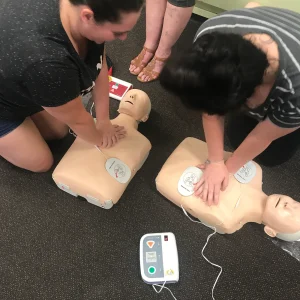
Using a Defib increases a person’s chance of survival from 10% to 80%. Is there one at your workplace?
You can make all the difference by learning CPR.
4. It’s easier than you think
One of the reasons that people shy away from learning CPR is that they feel it may be too hard. Would you be surprised to know that this is a skill that can be virtually learned at any age.
In fact many organisations are promoting children as young as aged 5 to learn this skill. At F.A.S.T. we train teens, families and of course many workers in workplaces and those in higher risk industries such as electricians, however the point is that anyone can do this.
Yes, that means YOU can do this!
We do offer an Allergy Awareness program to junior school aged children that empowers them with life saving information regarding asthma, anaphylaxis and CPR.
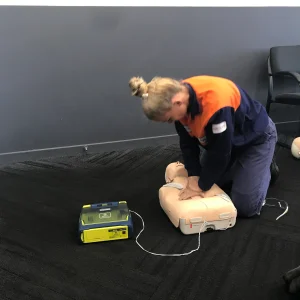
We also support high risk industries with Low Voltage Rescue and CPR training
CPR is kept up to date by refreshing annually as part of your First Aid qualifications, however, can also be done as stand-alone training.
At F.A.S.T. , we feel it is incredibly important to ensure training is relatable and that you walk away feeling confident about your newfound skills.
Our goal is to make it fun, interactive and to learn skills you can transfer into real life.
5. You don’t have to do mouth-to-mouth?
Yes, that’s right! Is that surprising?
There are some exceptions to this (e.g. for children and for drowning incidents) however you can do compressions only. Perhaps people shy away from learning the skill due to this. Not everyone is a fan of performing the ‘kiss of life’ particularly to a stranger! There is important information you need to know about timings and technique, however you shall learn this in your CPR training.
6. CPR is needed for someone after cardiac arrest
According to the Heart Foundation heart attacks are responsible for causing 1 in 25 of all deaths – that’s really alarming! Let’s put that into perspective. We are talking about 19 people on average a day losing their life to heart attack.

In Australia, 19 people lose their lives each day to Heart Attack
Considerably more males die from heart attack than females. (Heart Foundation)
When people think about heart attacks though, they often relate this to age and believe that it is something that only happens to the older community.
This is simply not the case.
Heart attacks affect our younger generation too. CPR is the primary lifesaving skill needed to support someone who has had a cardiac arrest.
Positively, the prevalence of heart attacks has been decreasing over time as more education and knowledge is shared.
7. You’ll improve your modern music knowledge
What the!?
If you have done CPR courses previously, you may be familiar with keeping the compression tempo in line with the Bee Gees “Staying Alive”. As times move on, we try to keep more relevant and many of our young ones simply may not be as familiar with the Bee Gees!!
Who would have thought!
In the last couple of years timings of compressions have been more updated and typically themed with “Baby Shark” the first verse is 110 beats per minute, which is an ideal rate for CPR!
Australian Red Cross has recognised the need to update the music themes for CPR timing, from the Disco era and launched the ‘Next Gen Life Beats’ campaign in search of the best timed beats.
So far the songs in the running for inclusion are:-
- Dua Lipa: Dance the night
- Harry Styles: Late Night Talking
- Taylor Swift: The Man
- Kylie Minogue: Padam Padam
Keep tuned and we will update you on the outcome. The aim should be between 100 to 120 chest compressions per minute.
Personally, I am not a fan of attaching a song to a traumatic situation. Yes it lightens a very dark topic in a classroom environment, but songs can trigger PTSD. From experience you will be lucky to remember how to count let alone the words to a song!!!
8. Doing something IS better than doing nothing
“Any attempt is better than no attempt at all” Australian Resuscitation Council of Australia.
Do you agree if your death was imminent you would be happy if someone had a go at CPR? I know I would be!
Doing something IS better than……doing nothing!
Be confident knowing that the Good Samaritan Act in Australia covers you in the event you need to provide first aid or CPR. It covers you, as long as you stay in the scope of your training or have followed instructions from the 000 operator. If you go all McGyver or start free-styling it, you wont be covered.
9. Be a part of change
It is thought only 26% of Australians are trained in CPR. That means we have a very large skill gap of 74% of Australians who have not yet learned these critical lifesaving skills yet.
You can be a part of the change.
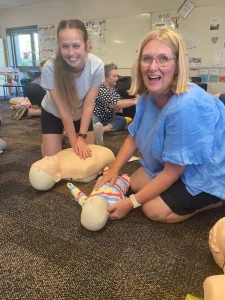
Book now to be part of the change!
Instead of looking to a bystander for critical lifesaving skills, you can learn CPR and make a difference.
10. The First Aid in the Workplace Code of Practice was updated in 2021
This Code of Practice on first aid in the workplace is an approved code of practice under section 274 of the Work Health and Safety Act 2011 (the WHS Act). It was updated in 2021 to provide very specific guidance on supporting workplaces with understanding First Aid requirements in Queensland workplaces.
The Code of Practice now recommends the following ratio’s:
- Low Risk Workplaces – one first aider for every 50 workers
- High Risk Workplaces – one first aider for every 25 workers
- Remote High-Risk Workplaces – one first aider for every 10 workers.
Remember, when you undertake a First Aid course, this includes CPR training, so all First Aid Officers will also have knowledge of administration of CPR.
CPR is required to be refreshed annually.
Now you know the 10 important reasons why you should learn CPR, you should make this your year!
Courses:
HLTAID009 – Provide Cardiopulmonary resuscitation
HLTAID011 – Provide First Aid
HLTAID012 – Provide First Aid in an education and care setting
UETDRRF004 – Perform rescue from a live LV panel
Connect with us so we can understand your needs, to help you or your business today. Our mission is to make training as painless as possible for our course organisers and fun and engaging for our students.