
Asthma First Aid Management: Recognise the Signs and Respond to an Asthma Emergency
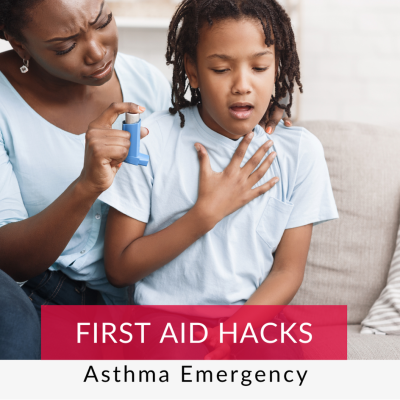
An Asthma Emergency can be life-threatening. People who suffer asthma should have an action plan and medication. In an emergency if a patient does not have their own reliever, use another person’s (if permitted under local state or territory regulations), or one from a first aid kit.
This Asthma Fact Sheet provides essential first aid guidance to help you respond quickly and effectively during an asthma attack.
Signs & Symptoms:
Mild to moderate asthma attack
- increasingly soft to loud wheeze
- persistent cough
- minor to obvious difficulty breathing
Severe asthma attack
- symptoms get worse very quickly
- little or no relief from inhaler
- severe shortness of breath, focused only on breathing
- unable to speak normally
- pallor, sweating
- progressively more anxious, subdued
- blue lips, face, earlobes, fingernails
What to do in an Asthma emergency:
- Follow DRSABCD.
- Help the asthma patient to sit down in a comfortable position.
- Reassure and stay with the patient.
- If requested, help the patient to follow their action plan.
How to give asthma medication (4 : 4 : 4)
- Use a spacer if available.
- Give 4 separate puffs of blue/grey reliever puffer: shake the inhaler, give 1 puff, take 4 breaths
- repeat until 4 puffs have been given.
- Wait 4 minutes
- If there is no improvement, give 4 more separate puffs of blue/grey reliever as above.
- If the patient still cannot breath normally, call triple zero (000) for an ambulance.
- Keep giving 4 puffs every 4 minutes (as above) until medical aid arrives.
In a medical emergency call Triple Zero (000). You could save a life with First Aid Training