
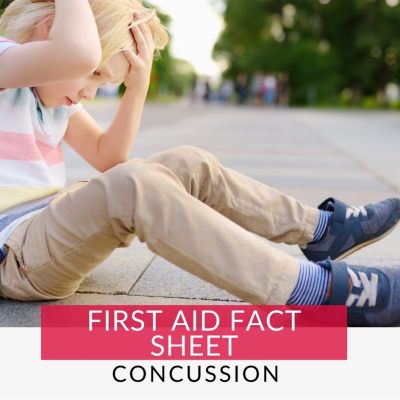
Concussion First Aid Management: How to Identify and Respond to a Serious Head Injury
Concussion is a serious head injury that requires prompt attention to prevent complications. This Concussion Fact Sheet covers essential first aid steps to recognize and respond to a concussion safely.
Any person who has suffered loss of consciousness or an altered state of consciousness after a blow to the head should not return to their activity (eg sport) and should see a medical practitioner urgently.
Signs & Symptoms:
- Some or all of the following may indicate concussion:
- loss of consciousness
- persistent headache
- faintness, dizziness
- confusion
- loss of memory, particularly of the event
- blurred vision
- slurred speech
- altered or abnormal responses to commands and touch
- vomiting within a few hours after a head injury
- wounds to the scalp or face
What to do when managing concussion:
- Follow DRSABCD.
- If the concussion patient is conscious and no spinal injury is suspected, place the patient in a position of comfort with their head and shoulders slightly raised.
- Advise them to seek medical attention.
- If the patient is unconscious and breathing but a spinal injury is suspected, place the patient in the recovery position, supporting the patient’s head.
- If the patient is unconscious and NOT breathing start CPR immediately.
- Call triple zero (000) for an ambulance.
- Ensure airway is clear and open. Keep the patient’s airway open by lifting their chin. DO NOT force if the face is badly injured.
Head injury:
- Control any bleeding with direct pressure at the point of bleeding.
- If blood or fluid comes from the ear, secure a sterile dressing lightly over the ear. Lie the patient on their injured side, if possible, to allow the fluid to drain.
- Ensure 000 has been called, noting the patient’s condition so that you can report it to the paramedics.
In a medical emergency call Triple Zero (000). You could save a life with First Aid Training